Structural Drying & Dehumidification in Cordova, TN
Surfaces dry in a day; framing, subfloor and wall cavities do not. The drying team sets equipment to each room's evaporation load and keeps it running until the readings say dry.
(888) 849-5796Cordova structural drying help, 24/7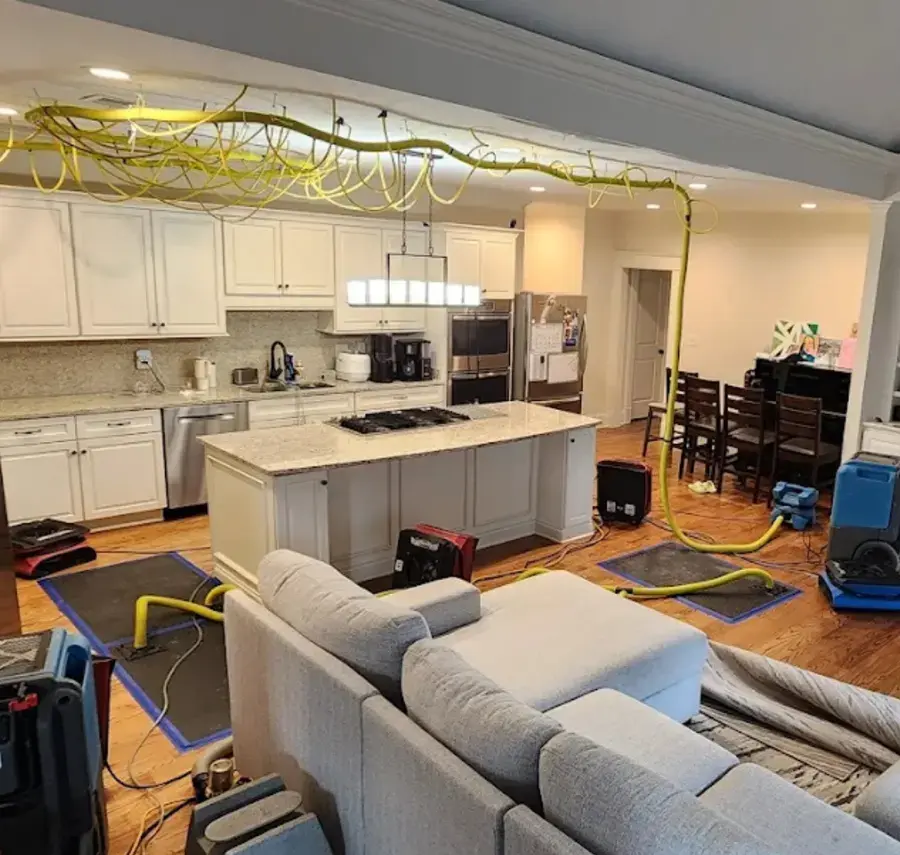
What to do first about structural drying in Cordova
- Stop the water
Make sure the source is shut off and repaired or isolated.
- Remove standing water
Extraction comes first; drying equipment cannot keep up with puddles.
- Keep the house closed
In humid weather, keep windows closed so the dehumidifiers work on inside air.
- Leave the gear running
Do not turn off air movers or dehumidifiers between readings.
How structural drying is handled in Cordova, TN
Moisture mapping first
The structural drying job starts with a moisture map, so the drying plan matches what is actually wet instead of what looks wet.
Category and class set the plan
Category 1, 2 and 3 water are handled differently, and Class 1 through 4 sets how much equipment each room needs.
Structural drying, not surface drying
Air movers and LGR dehumidifiers run until the framing and subfloor read dry, not until the carpet feels dry.
A file built for the claim
Daily psychrometric logs and timestamped photos taken before any demolition go into the claim file.
What does structural drying cost in Cordova, TN?
In Cordova, TN, structural drying typically runs $1,000 to $15,000 or more, depending on the class of loss, the square footage, dense materials like hardwood or concrete, and how many days the equipment has to run.
One room, Class 1 or 2
- Air movers and one dehumidifier
- Daily readings
- Drying log
Several rooms, Class 3
- Cavity drying
- Several LGR units
- Psychrometric logs
Class 4 or whole level
- Desiccant dehumidifiers
- Hardwood and slab drying
- Extended monitoring
These are typical ranges, not a quote. Try the water damage cost calculator for a planning number; the firm figure comes from the on-site assessment.
Structural drying is what separates a finished dry-out from a cosmetic one. Water that soaked into studs, plates, subfloor and the bottom of drywall stays there long after the carpet feels dry. In a humid Cordova summer, it will not leave on its own. The drying team uses controlled airflow and dehumidification to pull it out, and measures progress every day.
How the equipment is set
- Air movers placed to the evaporation load of each room
- LGR dehumidifiers sized to the space and the class of loss
- Desiccant dehumidifiers for dense Class 4 materials like hardwood and concrete
- Wall cavity and floor drying systems for trapped water
The drying goal
IICRC S500 is the industry drying standard. Crews compare wet materials with a dry reference material in an unaffected part of the same house, and the goal is to get within 2 to 4 points of it. Psychrometric readings, meaning temperature and humidity, are logged with the moisture readings so the claim file shows the job was finished, not just stopped. Related: water extraction and slab leak water damage.
Walls feel dry but the house still smells damp? The framing may not be.
Call (888) 849-5796 for Cordova structural dryingHumidity in the Mid-South
Outdoor dew points in a Shelby County summer are high, which is why windows usually stay closed during drying. The EPA indoor air quality pages explain indoor humidity, and the National Weather Service Memphis office tracks local conditions.
The structural drying dry-out, from first reading to last
- 1
Map the moisture
The tech who does the walkthrough maps the structural drying with thermal imaging and pinless meters before any equipment goes down.
- 2
Extract the water
The extraction crew pulls standing water with truck-mounted extraction so it leaves the building instead of moving to the next room.
- 3
Set the drying
Air movers go in at the evaporation load of each room, with LGR dehumidifiers pulling that moisture back out of the air.
- 4
Verify and document
Readings are logged daily until wet material sits within 2 to 4 points of a dry reference, then the drying team pulls the gear.
Structural Drying and Dehumidification across Cordova and nearby towns
The Cordova restoration crew covers every Cordova ZIP plus the neighboring towns, day or night.
Cordova water damage pros cover ZIP codes 38016, 38018 and 38088, from Wolfchase and Countrywood down to the Wolf River, with rapid local response day or night.
Coverage also reaches Bartlett, Germantown, Lakeland, Eads, Arlington, Collierville and East Memphis.
See every neighborhood and ZIP coveredStructural Drying and Dehumidification questions in Cordova, TN
How long does structural drying take?
A contained Class 1 loss usually dries in three to five days. Hardwood, plaster and concrete take longer because moisture moves slowly through dense material.
What does IICRC S500 mean?
IICRC S500 is the industry standard for professional water damage restoration. It covers how losses are classified, how drying is set up and how the drying goal is verified.
Why do air movers stay after the floor looks dry?
Surfaces dry first. Framing and subfloor hold water longer, so equipment stays until readings reach the goal, not until things look dry.
What is a dry reference material?
It is the same type of material in an unaffected part of the house. Wet materials are dried until their readings are within 2 to 4 points of it.
Can I turn the equipment off at night?
It is best not to. Turning off air movers and dehumidifiers lets humidity rise again and slows the whole dry-out.
What goes in the drying log?
Daily moisture readings for each wet area, temperature and humidity readings, and the equipment in place. It becomes part of the claim file.
Structural Drying and Dehumidification in Cordova? Call now.
Every hour of standing water pushes it deeper into subfloor, drywall and framing. The Cordova restoration crew extracts, dries to the IICRC S500 standard and documents the loss for the claim.